
In addition to the beer, visitors to the Oktoberfest can enjoy some very traditional Bavarian dishes. Here, we list some of the foods that are served at the Oktoberfest in Munich - many of which you will find at Oktoberfest celebrations throughout the U.S.
Soups
| ||
 |
KartoffelsuppePotato soup is a traditional soup enjoyed throughout Germany. As with many potato dishes, recipes vary by region and family, so there is no one typical German potato soup. Of course, the main ingredient in this soup is potato, which is cooked in broth or salt water along with other vegetables, such as carrots, celery, onions. Once the vegetables are cooked, the potatoes are usually mashed or pureed. Crispy bacon pieces or grilled onions are added to the soup, along with various herbs and spices. Bread or rolls are also served with the soup, which are usually crumbled into the soup
| |
 |
Leberknödel Suppe
Liver dumplings are dumplings made from calf's or beef liver, along with onions, bread, and herbs and spices. Some recipes also include bacon. | |
Wurst & Meat Dishes
| ||
 |
Bratwurst
The name "Bratwurst" most often refers to a sausage made from pork in a natural casing and is grilled or fried in a pan. It is a favorite in Germany, with each region having its own specialty.
| |
 |
Cordon Bleu
Cordon Bleu ("Blue Ribbon" in French) is basically a Schnitzel that is stuffed with cheese and ham. Traditionally, the Cordon Bleu is made with veal cutlets. | |
 |
Curry Wurst
Currywurst is Germany's favorite fast food. A boiled wurst or bratwurst is cut into 1-inch thick pieces, then topped with a sauce made from ketchup or tomato paste, curry powder, and paprika. It is typically served with a roll (Brötchen) or french fries. | |
 |
Frankfurter Würstschen
A long, thin sausage that is flavorful, lightly smoked, and made from pork. In Germany, a law that was established in 1860 protects the "Frankfurter." According to this law, only those sausages that were actually made in the city of Frankfurt or its surrounding suburbs can be called "Frankfurter." Butchers outside of this area must call the sausages "Nach Frankfurter Art" (meaning they were made like Frankfurters, but were not made in the Frankfurt area). | |
 |
Kassler Rippchen
Kasseler Rippchen are pork chops (cuts of pork loin) that have been smoked and ripened in a salt brine. | |
 |
Knackwurst - This short, chubby, cooked link sausage is a fine ground blend of lean pork and beef with just a touch of garlic.
| |
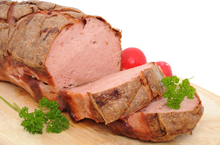 |
Leberkäse - This is a flavorful, compact, pink meat-loaf. It is made wtih beef and/or pork. Some lighter versions are made with turkey meat. It is baked in a loaf pan and made without a casing.
| |
 |
MettwurstMade from pork, beef, and bacon. Some are smooth in texture, made from finely ground ingredients. Others are less smooth, made from coarsely ground ingredients. The less smooth varieties are also usually strongly seasoned and smoked.
| |
 |
Nürnberger RostbratwurstThe Nürnberger Rostbratwurst (or just Nürnberger Bratwurst) is a bratwurst from the city of Nürnberg. It is made from coarsely ground lean pork and is usually seasoned with marjoram, salt, pepper, ginger, cardamom, and lemon powder.
| |
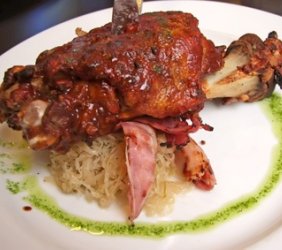 |
Eisbein / SchweinshaxeThe pork knuckle can be cooked in Sauerkraut or boiled. The picture on the right shows this cooking method. This results in a very soft, moist meat. The pork knuckle is traditionally served with Sauerkraut and mashed or boiled potatoes. In Berlin, the dish also includes a pea-puree (made from cooked, pureed peas mixed with mashed potatoes, onions, bacon, and sometimes the drippings from the pork knuckle).
| |
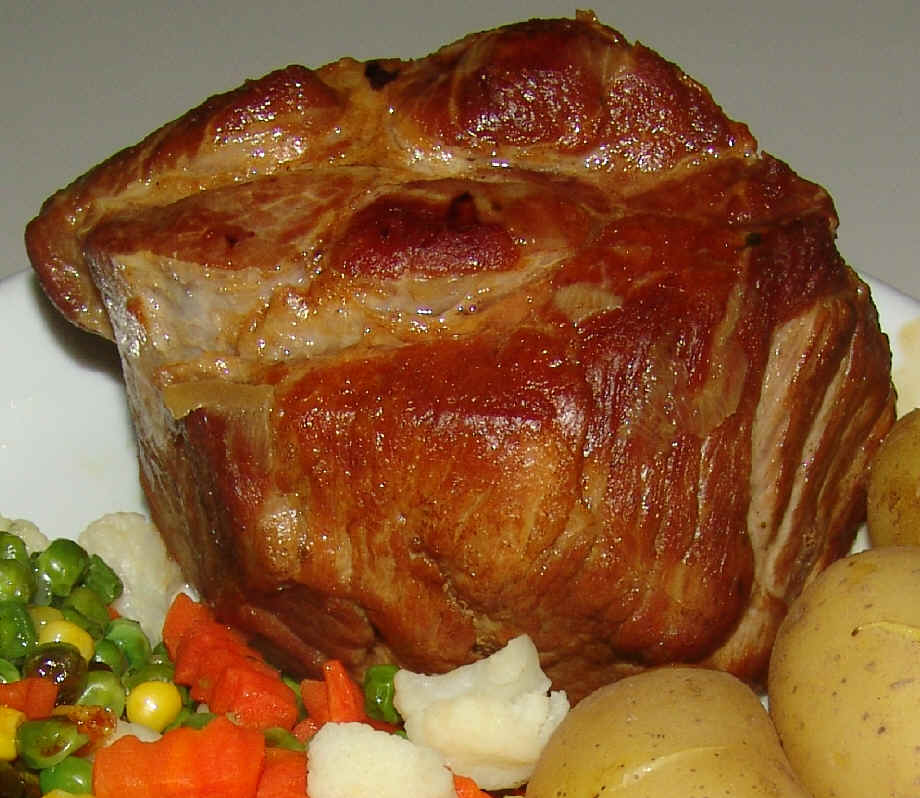 |
SchweinebratenThe pork roast is a traditional dish of Bavaria (Bayern). It is a large (2 to 3 lb) piece of pork, usually a loin or shoulder cut, seasoned with salt, pepper, caraway seeds, and sometimes garlic. It is then roasted whole in a roasting pan in the oven. It is also traditionally roasted with vegetables, such as carrots, celery, and onions. The drippings from the roast are made into a sauce, which is served with the meat.
| |
 |
Weisswurst
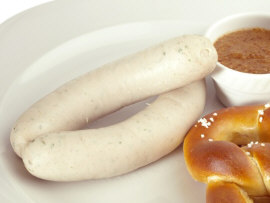
A sausage that is almost white in color. It is made from veal and pork, and it is seasoned with bacon, onions, parsley, salt, pepper, and lemon-powder. Its texture is smooth and slightly pasty. The Weisswurst is a long-standing tradition in Munich and has become popular through local festivals, such as Oktoberfest and Karnival (Mardi Gras). It is also a favorite among children, because of its mild taste. | |
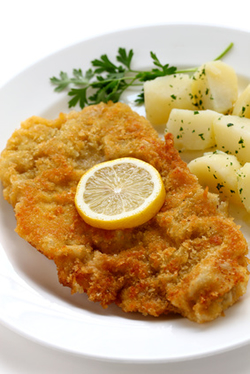 |
Wiener Schnitzel
A Wiener Schnitzel is a breaded veal cutlet. It is dipped in flour, egg, and bread crumbs, then fried in butter or oil to a golden brown. It is traditionally served with a lemon wedge, which you can use to drizzle fresh lemon juice over the schnitzel. | |
Vegetables & Side Dishes
| ||
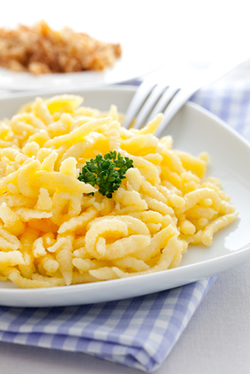 |
Käse-Spätzle
Spätzle are made from flour, eggs, water, and salt. Compared to Italian pasta, the Spätzle dough is moister and softer. Because of this, the dough cannot be rolled out. Instead, there are four ways to form Spätzle. | |
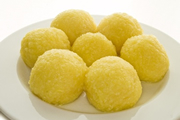 |
Knödel
There are several varieties of potato dumplings. Some versions are made with cooked potatoes. These have the consistency of mashed potatoes and, when done correctly, are light and fluffy. Potato dumplings made from raw potatoes are a bit grainy in texture and have a shiny surface. | |
|
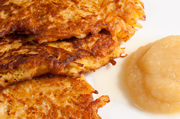
Kartoffelpuffer
Potato pancakes are known and loved throughout Germany. They are typically made from potatoes (either raw or cooked depending on the regional recipe), eggs, flour, oil or butter, salt, and pepper. Some regional recipes include additional ingredients, such as onions, yeast, milk, lemon juice, etc. The pancakes are pan-fried in oil until crispy and golden brown. | |
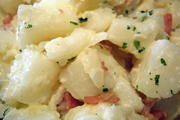 |
Kartoffelsalat
Potato salad is loved in Germany because of its universality. It goes well with a variety of dishes, including Schnitzel, Wurst, seafood, and other meat dishes.Some recipes use mayonaise, some use a vinaigrette, some use chicken broth, and some use a combination of these. In addition to the potatoes, other ingredients could include pickles, cucumbers, mustard, leeks, garlic, onions, apples, cabbage, eggs, bacon, wurst, seafood - anything is possible | |
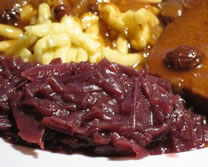 |
Rotkraut
Red cabbage is a very popular vegetable in Germany, and is most often eaten cooked (braised) as shown here (left), but is also eaten raw, such as in salads. Cooked red cabbage is most often served as a side dish to roasts, Schnitzel, goose, duck, game,Bratwurst, and Sauerbraten. It also goes well other sides, such as Spätzle, potato dumplings (Klöße), mashed potatoes, and potato kroketten. | |
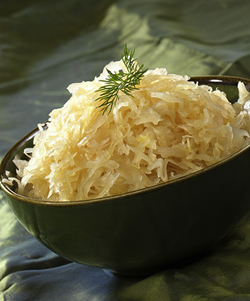 |
Sauerkraut
Depending on your taste, onions, bacon, juniper berries, caraway, and/or cream can be added to and cooked with the Sauerkraut. In many parts of Germany, pork ribs or pork cutlets are cooked in the Sauerkraut to give it a smokey flavor. The pork absorbs the liquid and becomes very soft and juicy. | |
 |
Schupfnudeln
Next to Spätzle, Schupfnudeln are the most popular side dish to meats. Schupfnudeln are made out of cooked, mashed potatoes and formed into finger-thick noodles. Other ingredients include flour, salt, pepper, nutmeg, and egg. They are cooked in salt water for 3 minutes, then pan fried in butter until crispy and golden brown. | |
Cakes, Baked Goods, & Desserts
| ||
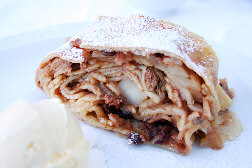 |
Apfelstrudel
Apple Strudel is a specialty of Austria and Bavaria (Bayern) and it is known worldwide. It is a Strudel filled with chopped apples, cinnamon, raisins, and roasted bread crumbs. Other ingredients could include nuts (such as almonds or walnuts) and rum, depending on the recipe. The filling is spread out over the Strudel dough, which is then rolled up into a log. It is baked in an oven until golden brown and the ends become crispy. | |
 |
Bienenstich
This is a traditional Blechkuchen made from a yeast dough and topped with a butter-sugar-almond mixture. During baking, this topping caramelizes, giving the cake a shiny appearance. After baking, the cake is often also filled with a vanilla cream | |
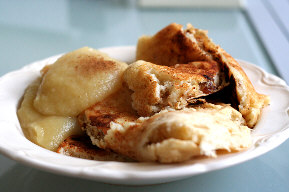
Dampfnudel
Dampfnudel is a traditional dish in Southern Germany. They are made from a yeast dough and formed into balls. The balls are cooked in a pot with a little liquid. In Bavaria, this liquid is milk and butter. In Palatinate, this liquid is salt water and butter. As the liquid boils, it both cooks and steams the Dampfnudel. The result is a Dampfnudel with a crispy bottom and soft top (from steaming). They can be made with or without a filling. The Palatinate version is generally unfilled. | ||
 |
Kaiserschmarrn
Kaiserschmarren is a sweet pancake and is one of the best known warm desserts in Bavaria and Austria. The pancake is made with flour, milk, eggs, butter, rum-soaked raisins, and sugar. It is often topped with sugar and almonds. | |
 |
Lebkuchen
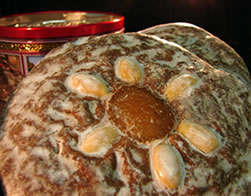
Lebkuchen, also called Pfefferkuchen, is German gingerbread. These cookies are either rectangular or round, they have a sweet, lightly nutty taste, and their aroma is spicy, a bit like nutmeg and allspice. They are usually soft with a slight crunch from chopped nuts. The Lebkuchen is a traditional Christmas cookie, which is often enjoyed with a cup of tea or coffee. There are many regional variations to the Lebkuchen, but the most well-known is the Nürnberger Lebkuchen from the city of Nürnberg. | |
 |
Zwetschgenkuchen
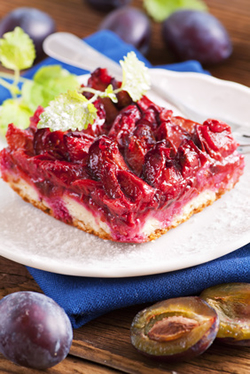
The Zwetschgenkuchen is a Blechkuchen made with a yeast dough (or sometimes a dough with baking powder as leavening instead of yeast). The dough is rolled out and placed on a baking sheet, then topped with halved Zwetschgen (Italian Prume Plums). It is usually then topped with crumbs made of white granulated sugar, butter, and flour. | |
 |
Pretzels
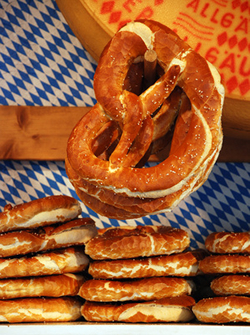
The ideal pretzel, as served in Germany, has a dark brown, crispy, salty crust, and inside a soft dough. It has a plump "body", and thin, crispy (not dry) crossed "arms." The pretzel is traditionally made from white (wheat) flour, malt, salt, yeast, and water. In some regions in Germany, fat is added to the dough to soften it. Other variations use whole wheat flour, spelt flour, or a mixture of different flours. Pretzels are topped with coarse salt or sometimes with sesame seeds, sunflower seeds, or poppy seeds. Before baking, the formed pretzel is dunked briefly in a mixture of sodium hydroxide and water. In German this mixture is calledNatronlauge. This is what gives the pretzel its unique color and flavor. Because of this technique, this type of pretzel is also called aLaugenbrezel. | |
Beverages
| ||
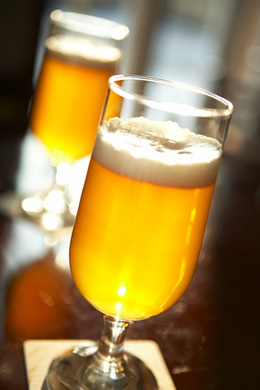 |
Bier
On part two!
| |
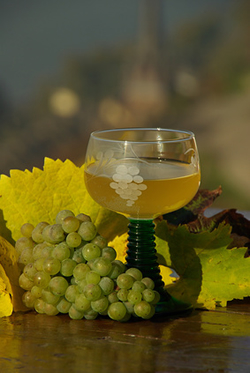 |
Weine
On part two! | |

No comments:
Post a Comment